
Eisenhower Matrix
The Classic Time Management Tool
Download the original Eisenhower Matrix template used by millions worldwide. Available in multiple formats for immediate use.
Free printable Eisenhower Matrix templates for generic. No email required.
 See Digital Features
Try the digital version free
A Simple Framework for Better Decisions
Named after President Dwight D. Eisenhower, this time-tested framework helps you focus on what truly matters by organizing tasks based on urgency and importance.
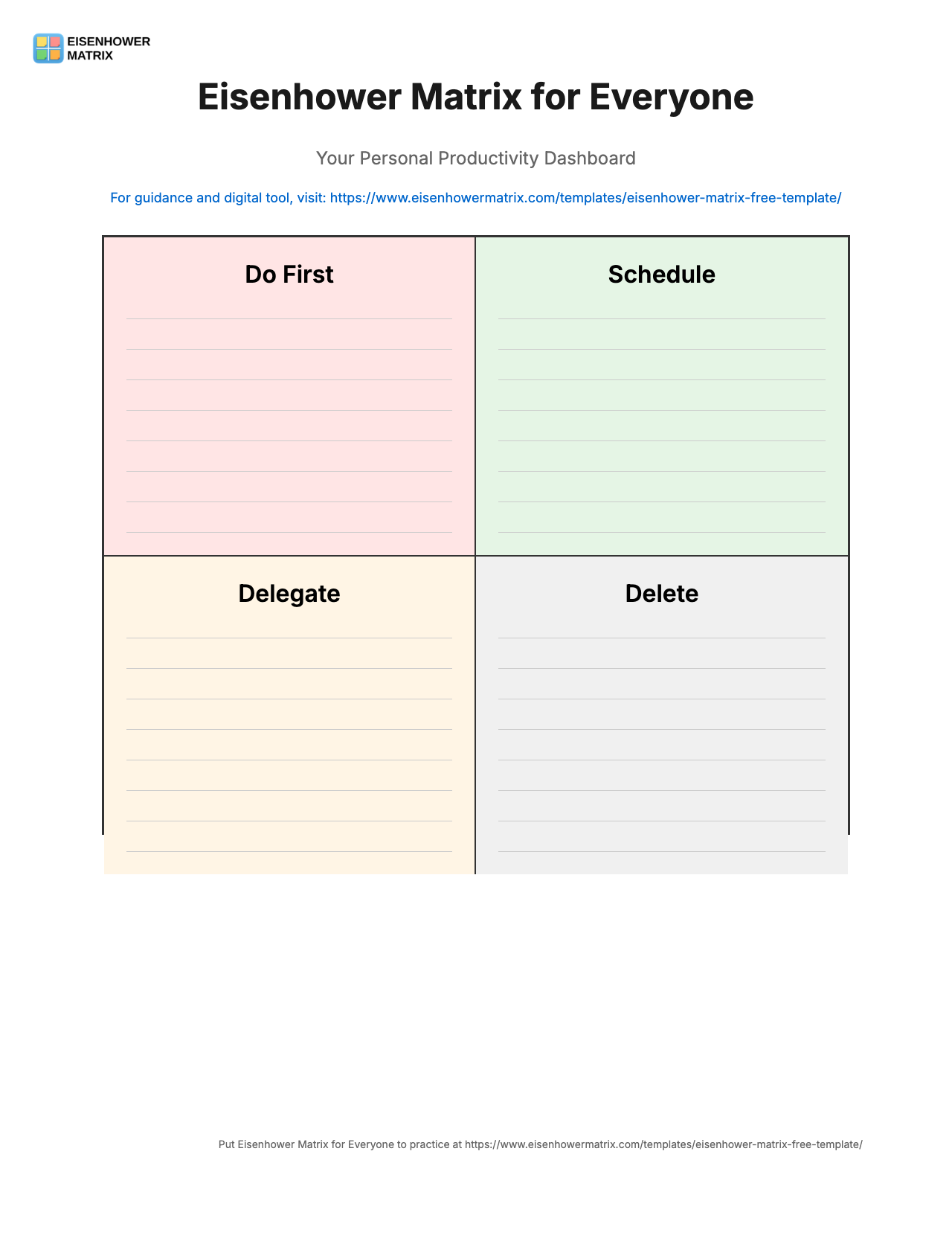
Urgent & Important
Crisis situations - handle immediately
Example: Emergencies, pressing deadlines
Not Urgent & Important
Strategic activities - plan and prioritize
Example: Planning, development, relationships
Interruptions - minimize or delegate
Example: Some emails, routine tasks
Time wasters - eliminate
Example: Busy work, distractions
Know exactly what deserves your attention and what can wait.
Stop wasting time on tasks that don't matter.
Feel confident you're working on the right things.
Choose your preferred format
Write down everything you need to do
Place each task in the right quadrant
Professional templates ready for immediate use
Yes Minister (1980–1984) and its sequel, Yes, Prime Minister (1986–1988), stand as the gold standard of British political satire. Written by Antony Jay and Jonathan Lynn, the series masterfully depicts the eternal power struggle between democratically elected politicians and the permanent bureaucracy of the Civil Service. The Core Conflict: Politicians vs. Bureaucrats
At the heart of every episode is a tug-of-war between two opposing forces. On one side is , the Minister for Administrative Affairs (and later Prime Minister), who is obsessed with short-term public approval, favorable headlines, and "doing something". On the other is Sir Humphrey Appleby , the Permanent Secretary, a career civil servant who believes the primary function of government is to maintain the status quo and, more importantly, to protect the Civil Service. Yes Minister And Yes Prime Minister
If you want to understand how modern government actually works—not how it’s supposed to work on paper—there is no better textbook than Yes Minister and its sequel, Yes Prime Minister . Despite airing primarily in the 1980s, the shows have proven timeless, quoted by real-life politicians from Margaret Thatcher to Boris Johnson. Yes Minister (1980–1984) and its sequel, Yes, Prime
From the first episode, the formula seems fixed: Jim Hacker proposes a sensible, electorally popular reform. Sir Humphrey responds with a cascade of jargon, procedural landmines, and historical precedent. Hacker yields. The audience laughs at the minister’s naivete. But this paper asks: Is Hacker actually losing? By examining key episodes through the lens of rational choice theory and political communication studies, we find that Hacker’s defeats are exquisitely functional. Bureaucrats James "Jim" Hacker At the heart of