
+2.5 Million
Active Science Users Worldwide

60%
Reduction in Laboratory Costs

80%
Improved Learning Retention Rate
Curriculum-aligned 3D simulations for remote and on-campus learning—boost engagement, track progress, and improve outcomes while cutting costs and risks.
For universities and educational institutions
+2.5 Million
Active Science Users Worldwide
60%
Reduction in Laboratory Costs
80%
Improved Learning Retention Rate


Enhance student engagement and learning outcomes with gamified virtual lab simulation—featuring instant reporting, a built-in question bank, and seamless LMS integration

Give students hands-on science experiences in safe, realistic 3D environments—featuring game-like simulations that build real lab skills and meet curriculum needs. What Is The Structure Of A Standard Dictionary

Empower your students with real-time, personalized guidance —while you get actionable insights and content recommendations for every experiment The Lexicon House In conclusion, the structure of

Easily create quizzes with custom questions, types, difficulty, and timing. Link them to lab experiments, and let PraxiLabs handle instant grading and feedback control—all in one place. The Lexicon House In conclusion

Track every student’s actions and completions in real time, and access automated performance reports to support smarter teaching decisions.

Connect to Moodle, Canvas, Blackboard, and more—in just 24 hours, with zero IT hassle and no extra cost. Stay in control while saving your team time and resources.

Reach visual, auditory, and kinesthetic learners with multimedia content, voice guidance, and interactive simulations—all on one platform.

1
Create Free Account
Register in seconds—no hardware or credit card needed. Try 3 full simulations and explore core platform features.
2
Book Institutional Demo
Schedule a personalized walkthrough for your institution. Preview all features, ask questions, and request a custom quote.
3
Unlock the Right Plan
Pick the plan that fits your curriculum—access 210+ simulations or select a specific virtual science lab, plus quiz builder and LMS integration.

Didn't find the simulation you need? No problem! We’ll customize the experiment to fit your curriculum in any language (upon request).
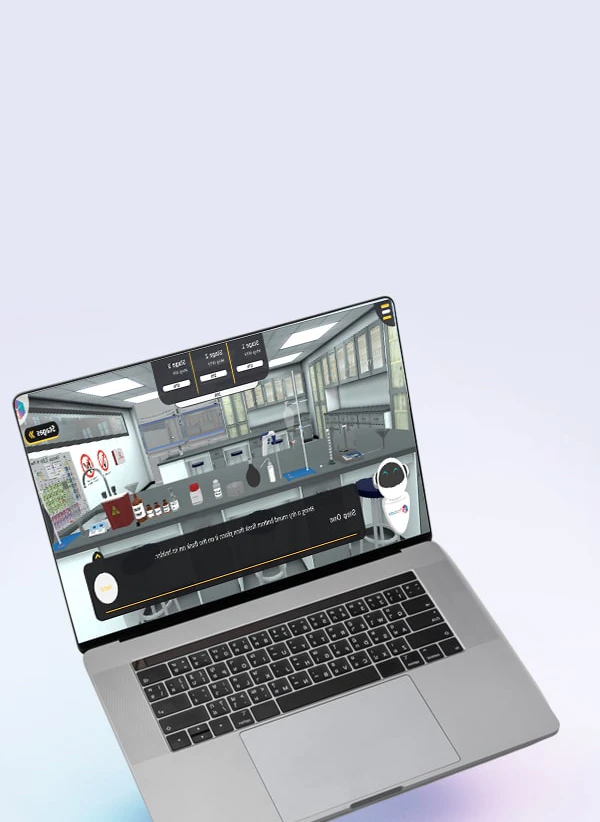
Our dedicated training team is always available to help your institution’s staff unlock the full potential of our virtual lab features.

Our expert support team is available around the clock for troubleshooting, onboarding, or technical help. We're always here to guide you.
In conclusion, the structure of a standard dictionary is a masterclass in information density. Through a combination of clear macro-organization and detailed micro-entries, it transforms a vast vocabulary into a searchable and educational database. Whether used for a quick spelling check or a deep dive into word history, the dictionary’s predictable framework ensures that the complexities of language remain accessible to all.
Variations of the word, such as plural forms, past tenses, or comparative adjectives (e.g., right arrow 3. The Definition Block Sense Numbers:
The core of the entry. For polysemous words (words with multiple meanings), definitions are organized, typically with numbered lists (1, 2, 3). The order can be:

For universities and educational institutions

210+
Virtual Science Lab Simulations Available

20+
Science Branches Covered

11
Globally Recognized Awards in Science Education

160+
Countries around the globe

24/7
Tech Support Available Anytime

24
Hours to Set Up Free LMS Integration
Over 10 Global Awards for Advancing Science Education and Student Engagement
In conclusion, the structure of a standard dictionary is a masterclass in information density. Through a combination of clear macro-organization and detailed micro-entries, it transforms a vast vocabulary into a searchable and educational database. Whether used for a quick spelling check or a deep dive into word history, the dictionary’s predictable framework ensures that the complexities of language remain accessible to all.
Variations of the word, such as plural forms, past tenses, or comparative adjectives (e.g., right arrow 3. The Definition Block Sense Numbers:
The core of the entry. For polysemous words (words with multiple meanings), definitions are organized, typically with numbered lists (1, 2, 3). The order can be: