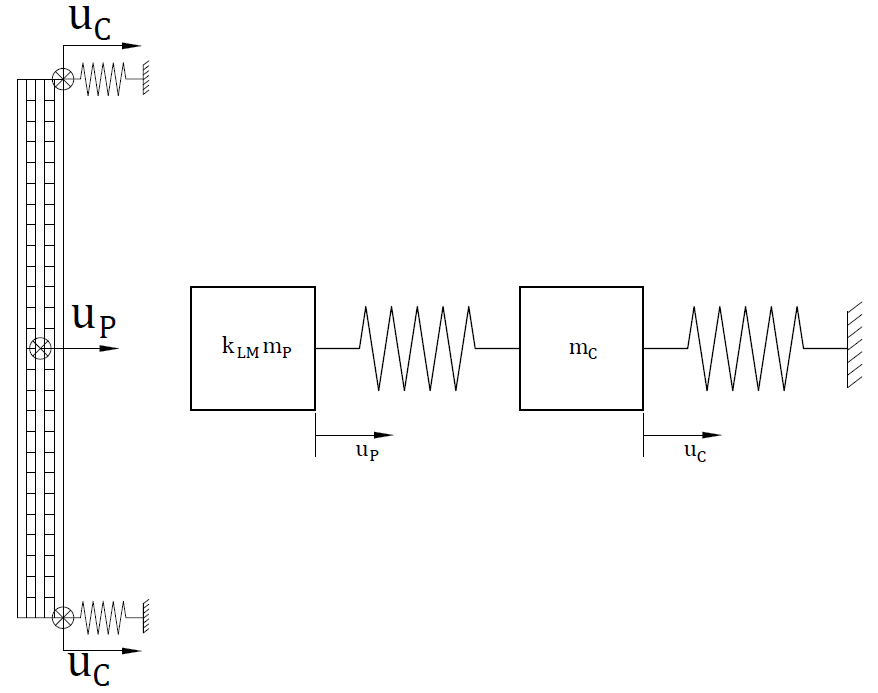
Two-Degree-of-Freedom Blast Analysis Software

Download Now

BlasTDOF is an unsigned software. Thus, you will likely get a "Unknown Publisher" warning. This is a normal security feature of Microsoft Windows Operating Systems.
Rest assure that BlasTDOF is safe.

Ibn Sa'd's at-Tabaqat al-Kubra (Vol. 3, p. 269) provides a detailed biographical entry on the prominent companion Mu'adh ibn Jabal, highlighting his scholarly stature in halal and haram . The entry also documents his role as a teacher and judge in Yemen, based on the well-known traditions regarding his knowledge. For more information, visit ويكيبيديا . كتاب الطبقات الكبير - ويكيبيديا

Tabaqat al-Kubra, Vol. 3, Pg. 269, H. 3714, offers a fascinating glimpse into the lives of the early Muslim community and the events that shaped their history. Ibn Sa'd's meticulous documentation of the hadith and historical events has provided scholars with an invaluable resource for understanding Islamic history, theology, and culture. This hadith, in particular, highlights the Prophet Muhammad's (peace be upon him) leadership, strategic thinking, and the bravery and loyalty of his Companions. As a historical text, Tabaqat al-Kubra continues to inspire research and study, offering new insights into the rich and diverse heritage of Islam.

Participation in Badr: Being listed in Volume 3 usually signifies that the individual was a "Badri," a title of immense spiritual and social honor in early Islam. Historical and Scholarly Context

Hadith 3714 Context

: This specific narration often provides a brief biographical sketch or a specific report about a Companion's character, conversion story, or details of their death. Informative Post: The Legacy of the Badr Companions

  • Volume 3 of Tabaqat al-Kubra
  • Page 269
  • Hadith (or report) number 3714

#3714

The narration associated with entry/hadith (depending on the specific edition or numbering system) typically recounts the moment ʿUmar was informed that his wound from the assassin Abu Lu'lu'ah was fatal. According to the biography in Kitab At-Tabaqat Al-Kabir , when the physician gave him milk to drink and it emerged from his wound, ʿUmar realized he would not survive and said:

It reflects on his personal habits and the complete transformation of his character, noting that he had abandoned all practices of the Controversy/Discussion:
tabaqat al kubra. vol. 3 pg. 269 h. 3714

Tabaqat Al Kubra. Vol. 3 Pg. 269 H. 3714 Today

Ibn Sa'd's at-Tabaqat al-Kubra (Vol. 3, p. 269) provides a detailed biographical entry on the prominent companion Mu'adh ibn Jabal, highlighting his scholarly stature in halal and haram . The entry also documents his role as a teacher and judge in Yemen, based on the well-known traditions regarding his knowledge. For more information, visit ويكيبيديا . كتاب الطبقات الكبير - ويكيبيديا

Tabaqat al-Kubra, Vol. 3, Pg. 269, H. 3714, offers a fascinating glimpse into the lives of the early Muslim community and the events that shaped their history. Ibn Sa'd's meticulous documentation of the hadith and historical events has provided scholars with an invaluable resource for understanding Islamic history, theology, and culture. This hadith, in particular, highlights the Prophet Muhammad's (peace be upon him) leadership, strategic thinking, and the bravery and loyalty of his Companions. As a historical text, Tabaqat al-Kubra continues to inspire research and study, offering new insights into the rich and diverse heritage of Islam. tabaqat al kubra. vol. 3 pg. 269 h. 3714

Participation in Badr: Being listed in Volume 3 usually signifies that the individual was a "Badri," a title of immense spiritual and social honor in early Islam. Historical and Scholarly Context Ibn Sa'd's at-Tabaqat al-Kubra (Vol

Hadith 3714 Context

: This specific narration often provides a brief biographical sketch or a specific report about a Companion's character, conversion story, or details of their death. Informative Post: The Legacy of the Badr Companions Volume 3 of Tabaqat al-Kubra Page 269 Hadith

#3714

The narration associated with entry/hadith (depending on the specific edition or numbering system) typically recounts the moment ʿUmar was informed that his wound from the assassin Abu Lu'lu'ah was fatal. According to the biography in Kitab At-Tabaqat Al-Kabir , when the physician gave him milk to drink and it emerged from his wound, ʿUmar realized he would not survive and said:

It reflects on his personal habits and the complete transformation of his character, noting that he had abandoned all practices of the Controversy/Discussion: